Showing posts with label injury prevention. Show all posts

Saturday, November 12, 2016

Military Physical Fitness and Body Transformation

U.S. Armed Forces physical training policies and strategies are key ingredients in the design and development of the Flab-to-Fit Total Body Transformation Program. These military policies are designed to:
  • Support combat readiness
  • Establish and maintain service member’s level of physical fitness
  • Achieve acceptable body fat and weight management standards
  • Improve service members’ overall health and wellness
  • Reduce unintentional illness and injuries due to poor physical fitness
With the exception of “combat readiness”, the remaining aforementioned policy goals can pertain to anyone and everyone. Just scratch out “service member” and insert your name and you’ll have relevant and viable health and fitness goals.

Monday, October 31, 2016

PROGRESSION

Progression is a principle of physical fitness. This principle states the exercise intensity and duration must gradually increase over a period of time in order to maximize potential physical training gains and minimize the risk of injury.


Tuesday, October 11, 2016

Hurdler-specific Warm-up Exercises

The specific warm-up works movements that are integral to hurdling, beginning the conditioning process and improving range of motion.

Do one set of ten repetitions per side of; Bird Dog, Donkey Kick, Fire Hydrant, Mountain Climber, and the Standing Quadriceps Stretch (10 seconds each).


Monday, October 10, 2016

WONDERING IF STRENGTH TRAINING IS FOR YOU?


Here are a few good reasons to strength train:
  • Your muscles will get stronger and toned
  • You’ll develop stronger bones
  • You’ll reduce body fat while adding muscle
  • You’ll look better
  • You’ll feel better
  • You’ll increase your mobility
  • You’ll decrease your risk of injury

Saturday, October 8, 2016

Flab-to-Fit: Week 7 of the Transformation Workout Program

Based on the proven training methods that has produced results for millions of armed forces members, the Flab-to-Fit program will have you strengthening and reshaping your body in a progressive manner to maximize your potential and minimize the risk of injury.


Being in the second month of training, we'll keep the relative intensity at about twenty percent of the program's most strenuous workouts. Don't be concerned about the relative intensity at this time, know that it will get progressively more difficult and that by following the exercise plan be assured that you will be fitter and capable of handling the increased workload when it comes. We're here to get fit, not to get injured; we'll take it one step at a time knowing that each step brings us one step closer to mission accomplishment. Now's the time to lay down a good foundation that we'll build up from starting in the near future.

Wednesday, October 5, 2016

Quality of Training or Training Quantity?

The quality of training is how well the exercises are performed and is influenced by the technique and loads that are used when performing the exercise.


Training quantity or volume is the total amount of weight lifted. Many individuals often sacrifice the quality of their training in an effort to increase quantity.
In strength training, you should strive to train intelligently. In general, it is recommended that you perform exercises with quality rather than focus on volume. More is less: more volume is often less effective.
Choosing a volume approach also increases the risk of over-training. Over-training combines doing too much without enough rest which results in decreases in performance while increasing the risk of illness and injury.

Tuesday, October 4, 2016

GOALS OF STRENGTH TRAINING

The type of training that is performed should be reflective of the goals and needs of each individual. Depending on one’s goals, specific training programs can target the desired results.
Powerlifters are not concerned with aesthetics. Their objective is to lift as much weight as humanly possible.
 In general, strength-training programs can be created to enhance the following general goals;
Muscle size - Muscular endurance - Muscular strength - Power

GET YOUR BODY READY TO WORK!

A good warm-up prepares your body for movement and conditioning activities. It will boost your performance by t gradually increasing heart rate and blood flow to muscles and elevating your core temperature.
In addition, warm-up activities increase flexibility by elongating muscles and removing stiffness from joints. The brain is also put on alert that some degree of motor coordination skills will be utilized in the near future. The desired end state is an injury-free, effective workout.

Tuesday, September 27, 2016

10 MINUTE DAILY WARM-UP


Like well organized physical conditioning plans, daily warm-up routines proceed in a progressive manner:
1. Walk During a five-minute walk, include arm circles and arm swings, high knees, and butt kicks and well as short jogging intervals.
2. Mobility Exercises These relatively low-exertion exercises mobilize various body movements and actively ease the body into motion and preparation for the additional physical stress of calisthenics.
3. Calisthenics These bodyweight exercises further mobilize the body, strengthen targeted muscle groups and are the final step in preparing the body for conditioning activities presented in the daily workout.

Thursday, August 25, 2016

Flab-to-Fit: The Total Body Transformation Program

Based on the proven training methods that has produced results for millions of armed forces members, the Flab-to-Fit program will have you strengthening and reshaping your body in a progressive manner to maximize potential and minimize the risk of injury.
Thinking or intending to exercise will not improve physical fitness and reduce body fat. Only action or movement will overcome inaction or disuse. Don’t look backwards…you are not going that way. Look forward…set goals…then take steps to achieve them. Remember, an elephant is eaten one bite at a time and a voyage of 3,000 miles starts with one step.

https://caloriebee.com/workout-routines/Flab-To-Fit-The-Total-Body-Transformation-Plan

Sunday, August 21, 2016

A Sane Approach to Physical Fitness and Body Fat Reduction

Based on the proven training methods that has produced results for millions of armed forces members, the Flab-to-Fit program will have you strengthening and reshaping your body in a progressive manner to maximize potential and minimize the risk of injury.
A comprehensive training plan that contains health and fitness information and workouts with:
  • A developed cross-training program that combines endurance, speed and strength activities;
  • Injury prevention techniques;
  • Capitalizing on the components of physical fitness that benefit training efforts.
https://caloriebee.com/workout-routines/Flab-To-Fit-The-Total-Body-Transformation-Plan


Friday, August 19, 2016

Flab-to-Fit: The Total Body Transformation Program

Based on the proven training methods that has produced results for millions of armed forces members, the Flab-to-Fit program will have you strengthening and reshaping your body in a progressive manner to maximize potential and minimize risk of injury.


Across the world, service members maintain their physical readiness and low body fat percentages through sound health and fitness habits which are in accordance with the latest accepted medical- and scientific-approved practices. The Flab-to-Fit program is designed using the techniques that has made the U.S. Armed Forces one of the fittest populations, male and female, on this planet.

http://hubpages.com/health/Flab-To-Fit-The-Total-Body-Transformation-Plan

Wednesday, August 17, 2016

The Annual Training Plan: Volleyball

Periodization is the development of a peak performance level at a certain time by systematically applying the principles of progression, overload and specificity in designing and implementing a physical conditioning plan. Performing to the best of one’s ability when it is most important is the goal. Additionally, periodization assists in avoiding over-training and in preventing injury.
Athletic teams utilize periodization by dividing the year into off-season, preseason and in-season periods. Their goal is to be at their best while in-season, particularly during the championship portion of the season. Likewise, individual athletes design their training plans to perform best at regional, national and world championship competitions. Periodization is important because the peak can only be maintained for a short period of time.
Most sports divide their annual training plan into four phases; off-season, pre-season, early season and late season. The training goes from general physical preparation and rest in the off-season to primarily high-intensity sport specific skills training and conditioning maintenance in the late season. Minimal sport-specific training occurs in the off-season while late season training includes minimal supplemental training.
http://hubpages.com/health/HOW-TO-BUILD-AN-ATHLETIC-BUTT-SERIES-PART-2

Tuesday, August 16, 2016

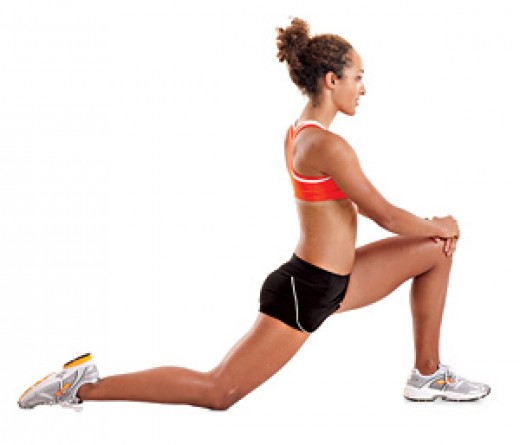
GLUTES-SPECIFIC STRETCHES

Athletic training exposes the body to a significant amount of physical stress which could lead to injury. Remaining flexible is key to reducing the risk of injury while improving overall performance. Flexibility is a key ingredient in speed and power production. The physical fitness components of speed and power are the what drives glute development.


The bottom line; if you are looking to shape your rear, you need to strive to maximize your power production. Maximal power production relies on flexibility. You might want a tight booty, but you don't want your glutes to be tight. Getting and staying flexible will pay dividends in the development of your athletic butt. Include these stretches in your cool-down routine on all days in which you conduct athletic drills or the glute-specific bodyweight workout. Hold each stretch for 15-30 seconds.


https://caloriebee.com/workout-routines/HOW-TO-BUILD-AN-ATHLETIC-BUTT

Thursday, August 4, 2016

MAXIMIZE POWER PRODUCTION WITH GLUTES-SPECIFIC STRETCHES

http://hubpages.com/health/HOW-TO-BUILD-AN-ATHLETIC-BUTT-SERIES-PART-1
Athletic training exposes the body to a significant amount of physical stress which could lead to injury. Remaining flexible is key to reducing the risk of injury while improving overall performance. Flexibility is a key ingredient in speed and power production. The physical fitness components of speed and power are the what drives glute development.
The bottom line; if you are looking to shape you rear, you need to strive to maximize your power production. Maximal power production relies on flexibility. You might want a tight booty, but you don't want your glutes to be tight. Getting and staying flexible will pay dividends in the development of your athletic butt. Include these stretches in your cool-down routine on all days in which you conduct athletic drills or the glute-specific bodyweight workout. Hold each stretch for 15-30 seconds.

Wednesday, August 3, 2016

CORE STABILITY & CARDIO TRAINING SESSION


This training session included a calisthenics period followed by a three mile run. The calisthenics period emphasized core exercises.
Core stability is the ability to control the position and movement of the central portion of the body. The core serves as the body's movement and power regulator. An increase in core stability can help maximize one's balance and athletic performance. Additionally, well conditioned core muscles help improve posture and reduce the risk of injury.