Showing posts with label power. Show all posts

Saturday, November 19, 2016

STRENGTH TRAINING

Strength training has grown in popularity over the years among both the athletic and recreational fitness communities. Whether your goals be health-related or performance-related, strength training can significantly help you in reaching your goals.

Athletic strength training programs are designed to assist athletes develop the ability to demonstrate explosive power. Like their training plans as a whole, the strength training segment is periodized in its progression of developing physical qualities.


Wednesday, November 16, 2016

ATHLETIC PHYSIQUE TRAINING PLAN

Training like a horizontal jumper will activate your glutes with explosive movements to improve your agility, power and speed. A very favorable consequence of these powerful and quick actions is the development of a phenomenal physique. Follow what these athletes do and you’ll better both your game and your caboose.


CROSS-TRAINING SESSION

An athletic cross-training session designed to improve acceleration, power and strength.
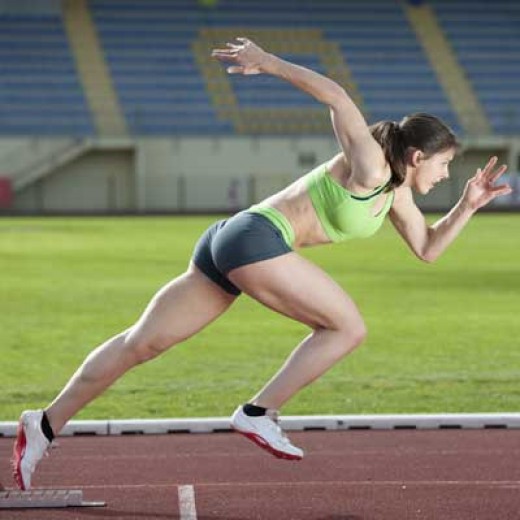
The acceleration portion of the workout mimics actions of sprinters while starting a race. The sprinters start exercise begins with a sprinters stance; one leg back and the other forward as if doing mountain climbers. Stand up bringing the rear forward and up to a high-knee position. The starting drills begin with the sprinters stance and are conducted by taking explosive steps out of the stance for five meters.
The power and strength period consist of two sub-periods. The first period consists of sets of single exercises; upright row, barbell squat and bench. Once these sets are completed; two rounds of a four exercise circuit are conducted. Fifteen seconds rest should be taken between each exercise and round while completing the circuits. Use light weights while conducting the curls and upright row during the circuit training.
The workout is completed with a flexibility period.

Monday, October 17, 2016

Goals of Strength Training

The type of training that is performed should be reflective of the goals and needs of each individual. Depending on one’s goals, specific training programs can target the desired results.


In general, strength-training programs can be created to enhance the following general goals;
Muscle size: A principal goal of bodybuilders. While muscle size may be aesthetically pleasing, it does not necessarily help to enhance an individual’s performance.
Muscular endurance: The ability to execute movements repeatedly. A health-related benefit of fitness and the goal of athletes who participate in endurance sports.
Muscular strength: The ability to produce force. Another health-related benefit of fitness, strength improvement assists in making physical activities, particularly the movement of heavy objects, easier.
Power: The ability to quickly produce maximal force. A performance-related benefit of fitness and the goal of athletes who partake in sports involving explosive movements.
For the most part, the differences between the training programs designed to emphasize one of these goals involves manipulating the number of sets, repetitions, and rest intervals.

Sunday, October 16, 2016

BEACH BODY ANNUAL TRAINING PLAN

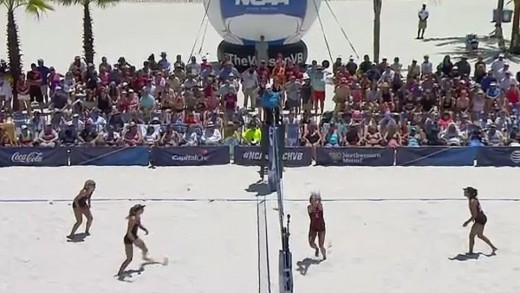
Without a doubt, the best and most specific way to develop beach volleyball skills and a beach volleyball booty in to play beach volleyball and workout using the sport's training routine. Beach volleyball conditioning will activate your glutes with explosive movements to improve your agility, power and, over time, will enhance your stamina.


Most sports divide their annual training plan into four phases; off-season, pre-season, early season and late season. The training goes from general physical preparation and rest in the off-season to primarily high-intensity sport specific skills training and conditioning maintenance in the late season. Minimal sport-specific training occurs in the off-season while late season training includes minimal supplemental training.

Thursday, October 13, 2016

PHYSICAL SKILLS DEVELOPMENT: JAVELIN THROWERS

Javelin throwers come in all shapes and sizes. Along with the discus and shot put, the javelin is a throwing event. Javelin throwers tend to be significantly leaner than their throwing counterparts.


The critical components of fitness for javelin throwers include:
  • Agility - the ability to quickly change directions;
  • Coordination - the ability to combine simple movements into an efficient complex movement;
  • Flexibility - the ability to move joints through a full range of motion;
  • Muscular Strength - the ability to produce force;
  • Power - the ability to quickly produce maximal force.
Javelin throwers ability to stay physically fit and perform explosive throws is based on their sport-specific skills and physical conditioning. Your athletic skills including agility, strength and power will be enhanced using the training activities conducted by these athletes. Besides added athleticism, their general conditioning program will go a long way to help flatten your abs and round your booty.

Tuesday, October 4, 2016

GOALS OF STRENGTH TRAINING

The type of training that is performed should be reflective of the goals and needs of each individual. Depending on one’s goals, specific training programs can target the desired results.
Powerlifters are not concerned with aesthetics. Their objective is to lift as much weight as humanly possible.
 In general, strength-training programs can be created to enhance the following general goals;
Muscle size - Muscular endurance - Muscular strength - Power

Saturday, October 1, 2016

SPEED WORK

A session to get explosive and fast with speed work. Wind sprints help muscle toning particularly in the glutes and legs as well as adding a key athletic skill to the exercise plan.


As an injury preventing measure, sprint at no more than eighty percent of your top speed. Additionally, ensure that you complete the general and specific warm-ups before sprinting and that you cool down and stretch afterwards.

Friday, September 23, 2016

BUILD A TIGHT BOOTY WITH ATHLETIC TRAINING


Athletes in general have some of the shapeliest and toned backsides on the planet. The glutes are best activated by power and speed movements; such as dashing and jumping. Explosive sporting events such as long and triple jumping, pole vaulting, sprinting, tennis and volleyball rely heavily on powerful glutes. Having super strong glutes is a prerequisite for success in speed and power events. Bodybuilders talk about “glute day or “squat day”, for these athletes, every day is glute day!

Beach volleyball is considered an anaerobic power sport were diving, jumping and sprinting are common activities. Beach volleyball players' power development training program includes two types of activities; plyometrics (jumping drills) and weight lifting. Speed, agility and quickness (SAQ) training gives players the ability to change directions quickly and reduces the chances of injury while conducting drills with the volley ball.

Sprinting and jumping are great ways to tone your derriere and build an athletic physique. Hurdlers do both in a single event. Hurdlers are phenomenal athletes; curvy and strong, fast and fit. Using their training techniques will go a long way in developing physical skills while shaping and toning your entire body.


Thursday, September 1, 2016

GLUTES DEVELOPMENT: BASIC ATHLETIC DRILLS

Athletes are defined by their ability to move. Great power athletes move quicker, jump higher and longer than their opponents, not to mention the average human being. Most people to not develop and benefit from powerful glute muscles, but power athletes need them to succeed at their chosen sports. They are key in producing explosiveness and speed. These athletes don't workout to obtain a high and round booty, they have an athletic butt as a consequence of their training.


Acceleration is defined as an increase in the rate or speed. An acceleration drill (10m start) is designed to assist in increasing initial explosiveness in order to reach maximum speed as quickly as possible. 
Jumping or leaping are great activities to wake up your glutes! Jumping Drills (standing broad jump & vertical jump) develop maximal horizontal and vertical explosiveness or propulsion. 
http://hubpages.com/health/HOW-TO-BUILD-AN-ATHLETIC-BUTT-SERIES-PART-1

Monday, August 29, 2016

DAILY EXERCISE PLAN: 21-27 August 2016

A synopsis of the military-style conditioning plan the author used during the week. His program is similar in design to those used by U.S. Marines and U.S. Special Operations Forces.
This week’s physical conditioning plan and daily workout sessions were designed and developed by myself to accomplish my fitness goal of maintaining a solid base of overall physical fitness. To sustain a solid base of overall physical conditioning I consider all components of physical fitness while conducting exercise planning.
A retired Marine, I am comfortable with designing my program in a manner similar to that of America's elite warriors. Their overall objective is to combine agility, endurance, power, speed and strength with combat skills to be applied in the defense of our nation.
http://hubpages.com/health/DAILY-EXERCISE-PLAN-21-27-August

Wednesday, August 24, 2016

POWER TRAINING FOR ATHLETIC & GLUTES DEVELOPMENT

This athletic power development training program includes two types of activities; plyometrics (jumping drills) and weight lifting. This training plan is designed to make the sports actions as explosive as possible.
Using a periodic approach; plyometric drills should start with high-frequency, low power drills such as jumping rope, a transition to moderate frequency, moderate power drills such as tuck jumps, and then low frequency, high power drills such as vertical jumps.
Similar to the periodic approach used for plyometrics, the training progression for weight-lifting goes from low-weight, high-repetitions to medium-weight, medium-repetitions to maximum-weight, low-repetitions and culminates in medium-weight, explosive repetitions.
https://caloriebee.com/workout-routines/HOW-TO-BUILD-AN-ATHLETIC-BUTT-SERIES-PART-2

Monday, August 22, 2016

SPORTS CONDITIONING WITH BEACH VOLLEYBALL

Beach volleyball training is designed to develop the following components of physical fitness:
  • Agility – the ability to quickly change directions;
  • Coordination – the ability to combine simple movements into an efficient complex movement;
  • Flexibility – the ability to move joints through a full range of motion;
  • Power – the ability to quickly produce maximal force;
  • Speed – the ability to move quickly from one point to another;
  • Stamina – the ability to conduct relatively short intensive efforts of a prolonged period of time.
https://caloriebee.com/workout-routines/HOW-TO-BUILD-AN-ATHLETIC-BUTT-SERIES-PART-2

Sunday, August 21, 2016

Play Your Way to an Athletic Butt

Without a doubt, the best and most specific way to develop beach volleyball skills and a beach volleyball booty in to play beach volleyball and workout using the sport's training routine. Beach volleyball conditioning will activate your glutes with explosive movements to improve your agility, power and, over time, will enhance your stamina.

https://caloriebee.com/workout-routines/HOW-TO-BUILD-AN-ATHLETIC-BUTT-SERIES-PART-2

Saturday, August 20, 2016

POWER DEVELOPMENT: BEACH VOLLEYBALL

Beach volleyball players' power development training program includes two types of activities; plyometrics (jumping drills) and weight lifting. This portion of their training plan is designed to make the players actions as explosive as possible.
Using a periodic approach; plyometric drills should start with high-frequency, low power drills such as jumping rope, transition to moderate frequency, moderate power drill such as tuck jumps and then to low frequency, high power drills such as vertical jumps.
Similar to the periodic approach used for plyometrics, the training progression for weight lifting goes from low weight, high repetitions to medium weight, medium repetitions to maximum weight, low repetitions an culminates in medium weight, explosive repetitions.
http://hubpages.com/health/HOW-TO-BUILD-AN-ATHLETIC-BUTT-SERIES-PART-2