
Showing posts with label conditioning. Show all posts
Showing posts with label conditioning. Show all posts
Tuesday, December 20, 2016
What are the Fundamental Principles of Strength Training?
Strength training is a science with methodologies and variables. Once your goals are established it's time to look at the basic principles that should be followed to develop a strength and conditioning program designed to help achieve your objectives. You will want to do specific things which depend on the goals of the training program.

Monday, October 31, 2016
How to Build an Athletic Butt: General Conditioning Plan for Horizontal Jumpers
Athletes have some of the shapeliest and toned backsides on the planet. Build your own killer booty with a long and triple jumpers' strength and conditioning plan. Runway and sand pit are not needed!

Sunday, October 30, 2016
BUILD AN ATHLETIC PHYSIQUE
General strength and conditioning drills and strategies used by athletes involving core conditioning, plyometrics, running, stretching and weight training. Core and glutes development is emphasized.

Thursday, October 6, 2016
How to Build an Athletic Butt Part 4
Athletes have some of the shapeliest and toned backsides on the planet. Build your own killer booty with the conditioning techniques used by track & field's javelin throwers. No spear throwing required!

Information concerning the general strength and conditioning drills and strategies used by javelin throwers is presented. This training involves core conditioning, plyometrics, running, stretching and weight training. Due to the nature of the event, core and glutes development is essential.
So it's time to build your own athletic physique with a javelin thrower's training plan. No spear slinging is involved!
Wednesday, October 5, 2016
Quality of Training or Training Quantity?
The quality of training is how well the exercises are performed and is influenced by the technique and loads that are used when performing the exercise.

Training quantity or volume is the total amount of weight lifted. Many individuals often sacrifice the quality of their training in an effort to increase quantity.
In strength training, you should strive to train intelligently. In general, it is recommended that you perform exercises with quality rather than focus on volume. More is less: more volume is often less effective.
Choosing a volume approach also increases the risk of over-training. Over-training combines doing too much without enough rest which results in decreases in performance while increasing the risk of illness and injury.
Monday, August 29, 2016
DAILY EXERCISE PLAN: 21-27 August 2016
A synopsis of the military-style conditioning plan the author used during the week. His program is similar in design to those used by U.S. Marines and U.S. Special Operations Forces.

This week’s physical conditioning plan and daily workout sessions were designed and developed by myself to accomplish my fitness goal of maintaining a solid base of overall physical fitness. To sustain a solid base of overall physical conditioning I consider all components of physical fitness while conducting exercise planning.
A retired Marine, I am comfortable with designing my program in a manner similar to that of America's elite warriors. Their overall objective is to combine agility, endurance, power, speed and strength with combat skills to be applied in the defense of our nation.
http://hubpages.com/health/DAILY-EXERCISE-PLAN-21-27-August
Monday, August 22, 2016
CROSS-TRAINING FOR BETTER FITNESS
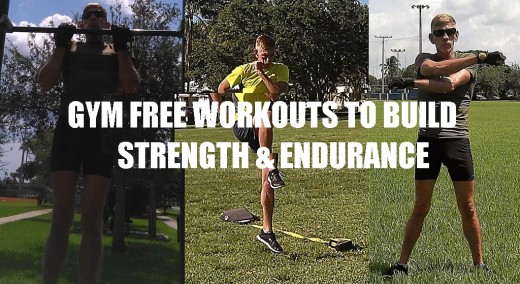
Cross-training different energy systems is the best way to achieve a better level of fitness. Routines differ so the body can not adapt to one particular system. The more varied the "routine", the better the workout. Changing workout routines and energy systems causes the body to adapt to different modes and recover quicker. This will lead to a well-rounded state of physical conditioning and a higher fitness level.
http://hubpages.com/health/GET-FIT-The-Exercise-Plan-for-14-20-August
Thursday, August 18, 2016
RESILIENCY TRAINING
Resiliency is the ability to recover quickly from change. This workout will test your resiliency by combining a variety activities in a single session to develop speed, strength and endurance using calisthenics, a conditioning hike and sprinting.

The calisthenics portion of the the workout emphasized core and lower body movements including air squats, planks and crunches.
Short, explosive sprints were designed to enhance acceleration and quickness. The loaded sprints can be accomplished by pulling a sled, wearing a back pack and sprinting uphill. Keep the weight to about 15% of your body weight.
The conditioning hike was completed wearing a back pack load with 30 pounds. The goal is to improve endurance while carrying extra weight using a moderate pace (approximately 20 minutes per mile).
https://caloriebee.com/workout-routines/STRENGTH-CONDITIONING-Exercise-Plan-for-31-July-6-August
Wednesday, August 17, 2016
The Annual Training Plan: Volleyball
Periodization is the development of a peak performance level at a certain time by systematically applying the principles of progression, overload and specificity in designing and implementing a physical conditioning plan. Performing to the best of one’s ability when it is most important is the goal. Additionally, periodization assists in avoiding over-training and in preventing injury.

Athletic teams utilize periodization by dividing the year into off-season, preseason and in-season periods. Their goal is to be at their best while in-season, particularly during the championship portion of the season. Likewise, individual athletes design their training plans to perform best at regional, national and world championship competitions. Periodization is important because the peak can only be maintained for a short period of time.
Most sports divide their annual training plan into four phases; off-season, pre-season, early season and late season. The training goes from general physical preparation and rest in the off-season to primarily high-intensity sport specific skills training and conditioning maintenance in the late season. Minimal sport-specific training occurs in the off-season while late season training includes minimal supplemental training.
http://hubpages.com/health/HOW-TO-BUILD-AN-ATHLETIC-BUTT-SERIES-PART-2
Friday, August 12, 2016
Make Strength And Conditioning A Part Of Your Daily Routine
The U.S. Armed Forces physical training programs presented at the services's basic training serves as an introduction to strenuous physical activity for many men and women. It goals include; physical adaptations (strengthening and conditioning) that take place to new service members' bodies, meeting our exceeding service-specific fitness requirements, and developing required physical skills necessary to survive and excel on the world's battlefields.

More than likely, going to war isn't on your list of things to do. That doesn't mean that you can't benefit from a military physical conditioning program. These benefits include; body composition improvement (lose excess body fat while gaining muscle tone), endurance, flexibility and strength. Regardless of your fitness goals, inclusion of military conditioning will enhance your overall conditioning base and level of physical fitness.
Tuesday, August 9, 2016
ACCELERATION-CORE STABILITY-ENDURANCE WORKOUT
The daily workout combined a variety activities to develop speed, strength and endurance using calisthenics, a conditioning hike and sprinting.

The calisthenics portion of the the workout emphasized core and lower body movements including air squats, planks and crunches.
Short, explosive sprints were designed to enhance acceleration and quickness. The loaded sprints can be accomplished by pulling a sled, wearing a back pack and sprinting uphill. Keep the weight to about 15% of your body weight.
The conditioning hike was completed wearing a back pack load with 30 pounds. The goal is to improve endurance while carrying extra weight using a moderate pace (approximately 20 minutes per mile).
WEEKLY TRAINING PLAN OVERVIEW
Many workouts can be completed in 30 minutes or less, but are intense. The workouts which develop cardiovascular endurance require more time since endurance is about sustaining activities over time.


DAY
|
OBJECTIVE
|
|---|---|
Sunday
|
Endurance & Speed
|
Monday
|
Muscular Endurance
|
Tuesday
|
Speed
|
Wednesday
|
Rest
|
Thursday
|
Cardiovascular Endurance
|
Friday
|
Strength & Endurance
|
Saturday
|
Rest
|
Monday, August 8, 2016
U.S. ARMED FORCES PHYSICAL TRAINING
Ready for an approach to physical training that consistently produces results? The physical conditioning programs utilized by the U.S. Armed Forces has transformed many relatively sedentary men and women into physically fit, combat ready service members capable of performing demanding physical tasks regardless of the clime or place.

Military fitness routines deliver results regardless of your abilities, background or experience. They are tailored to work for everyone and can be accomplished nearly anywhere. Department of Defense (DoD) Policy directs the armed services and all service members to "maintain physical readiness through appropriate nutrition, health, and fitness habits". The components of DoD Physical Fitness Program include:
- Cardiovascular Endurance
- Muscular Strength
- Muscular Endurance
- Desirable Body Fat Composition
The military services design and implement physical fitness programs to meet or exceed Defense Department policy using accepted training principles of physical conditioning. These programs and their workouts can be conducted nearly anywhere with a minimal amount of equipment or facilities.
This week's routine is fashioned using the components and principles utilized by the armed forces. Using common-sense, do-it-anywhere techniques this program will improve your strength and endurance while giving you a lean, toned look using balanced and challenging workouts.
New to military-style training? No worries, these easy to understand workouts will introduce you to to new and old-school exercises that have developed better bodies and enhanced the overall fitness of millions!
STRENGTH & CONDITIONING: Exercise Plan for 31 July - 6 August
Spending hours training without making progress? Try following battle-tested physical conditioning techniques used by the U.S. Armed Forces to keep their members "fighting fit".

Subscribe to:
Posts (Atom)